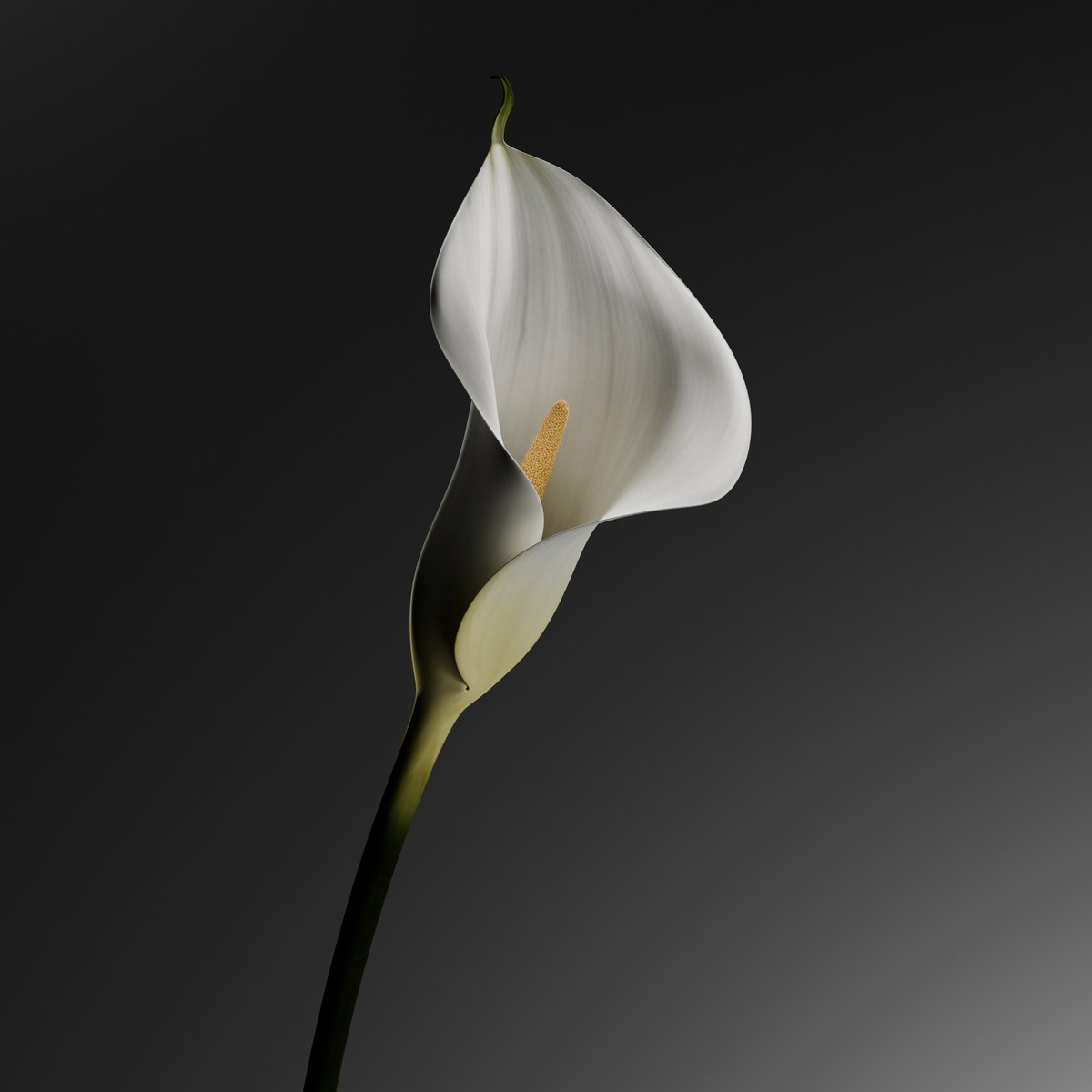
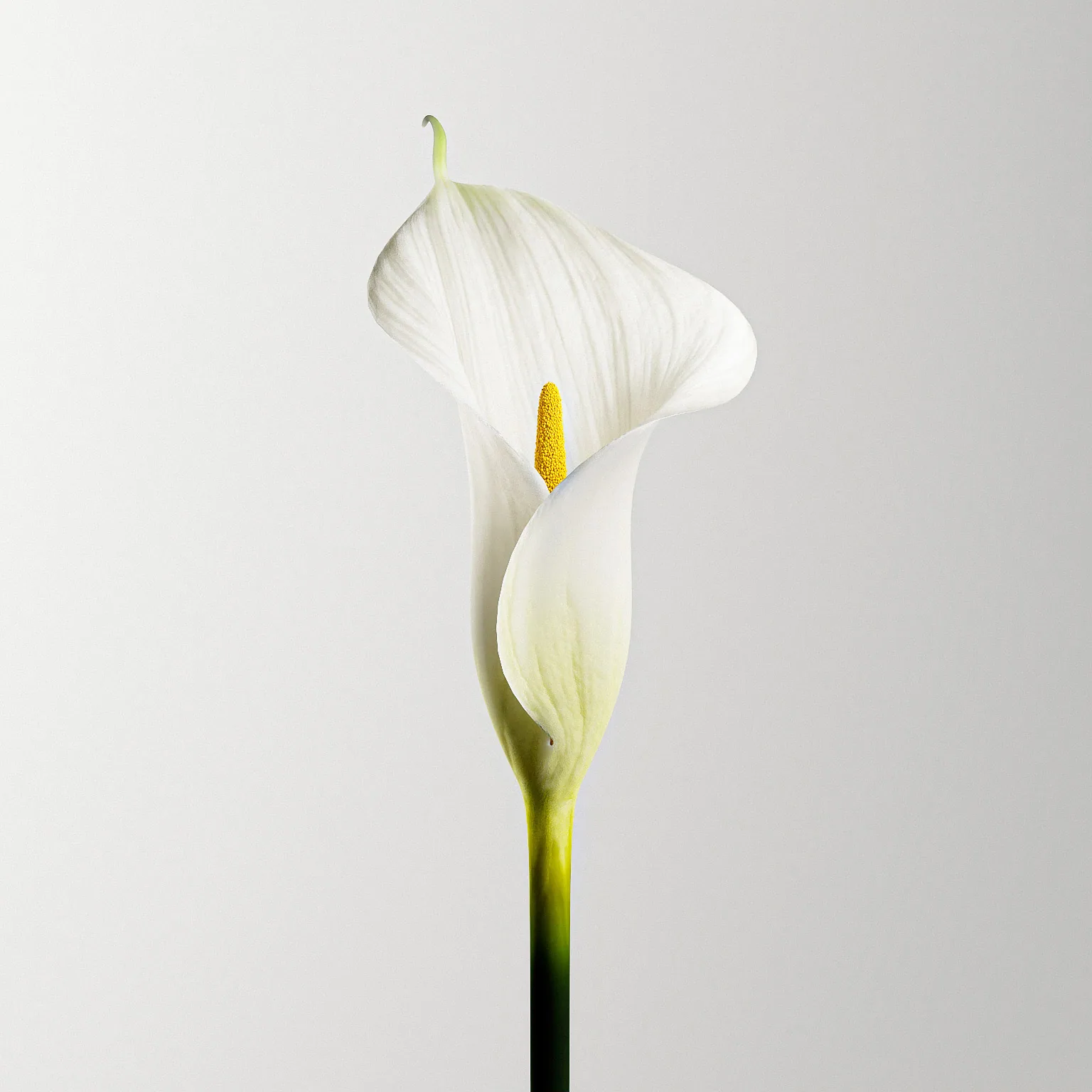
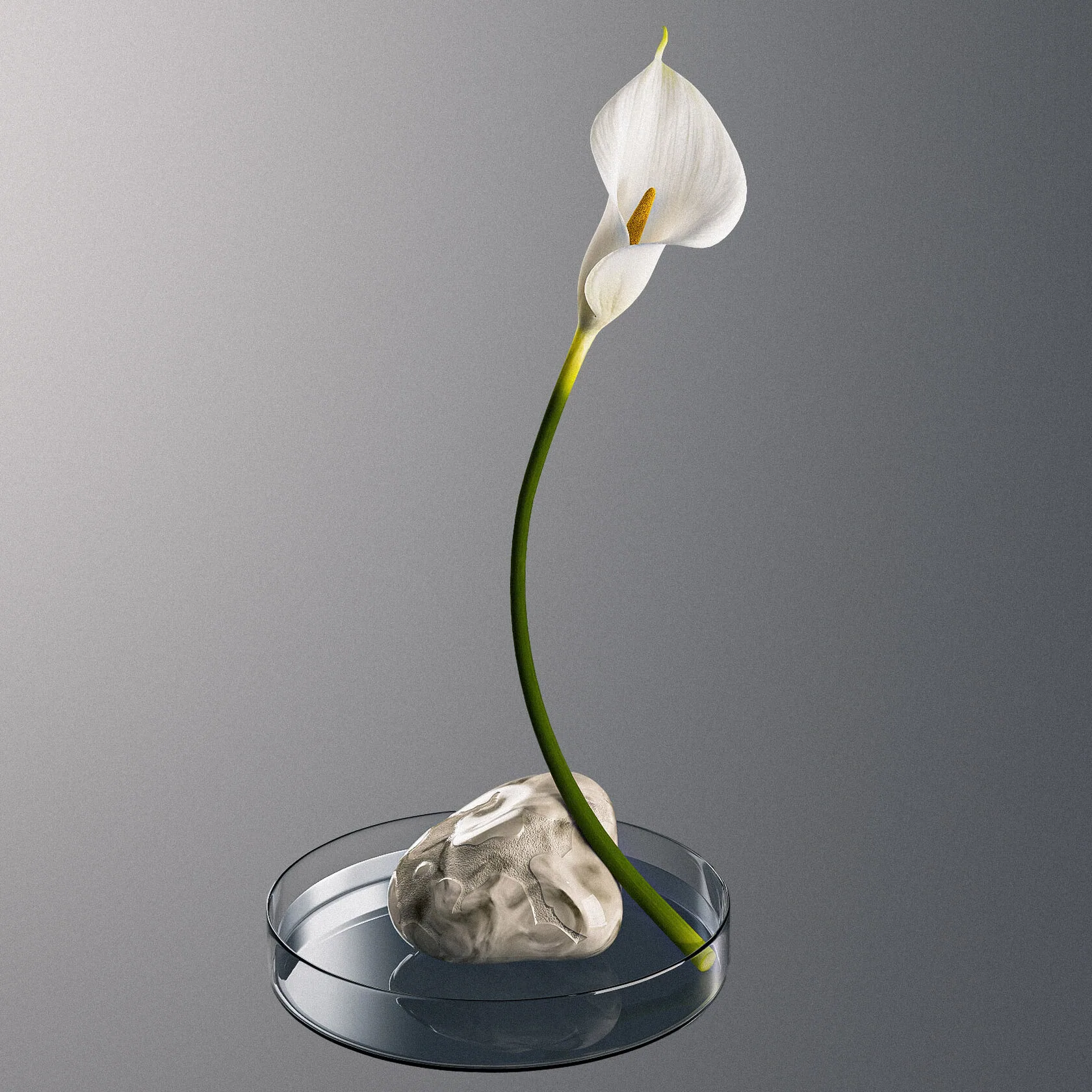
A dark burgundy calla lily opens from a tight bud into a full bloom. This is a ready-made 3D project for Cinema 4D and Redshift: a rigged model, the bloom animation, lighting, camera and an atmosphere with light rays and bokeh. Open the file and render right away. For Blender, Maya and Houdini, the full animation comes as Alembic together with PBR textures.
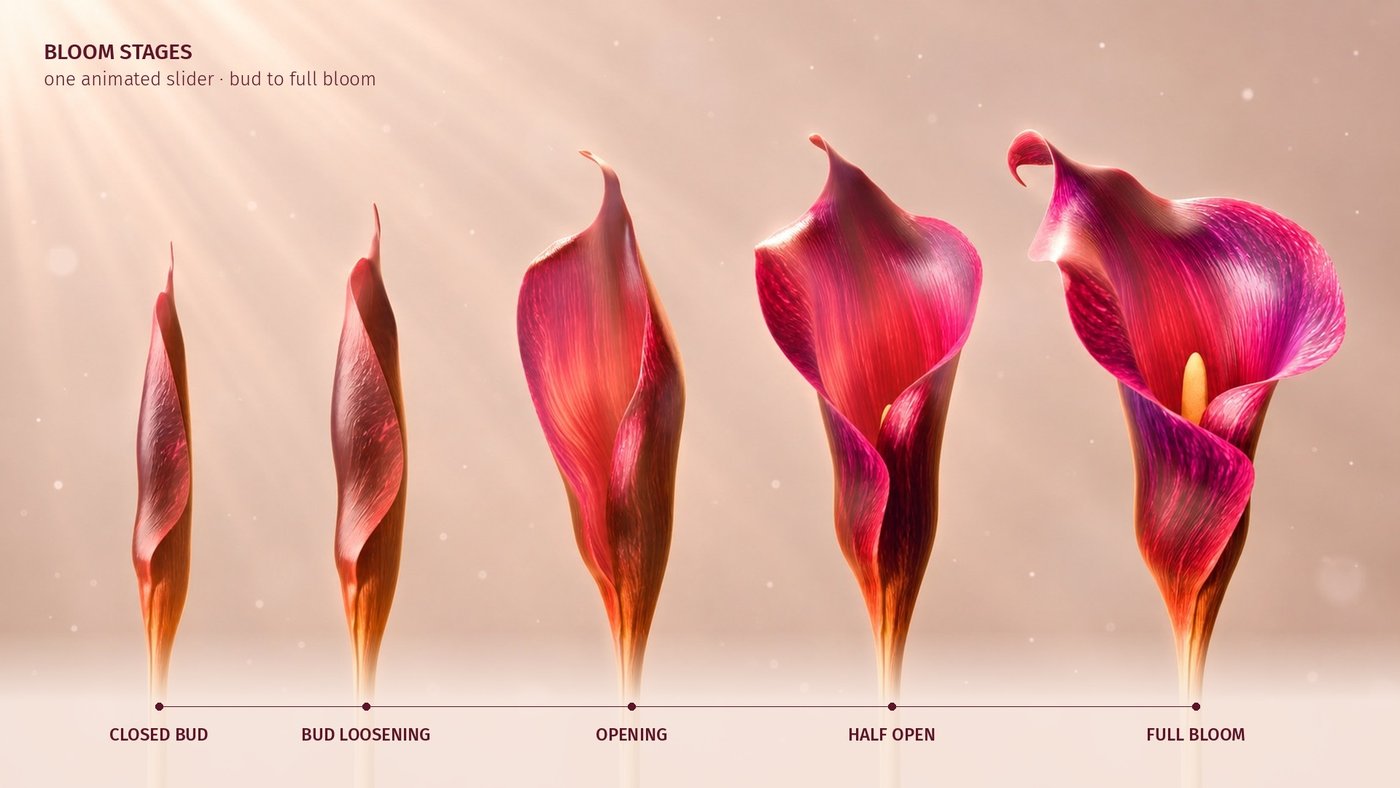
How the animation works
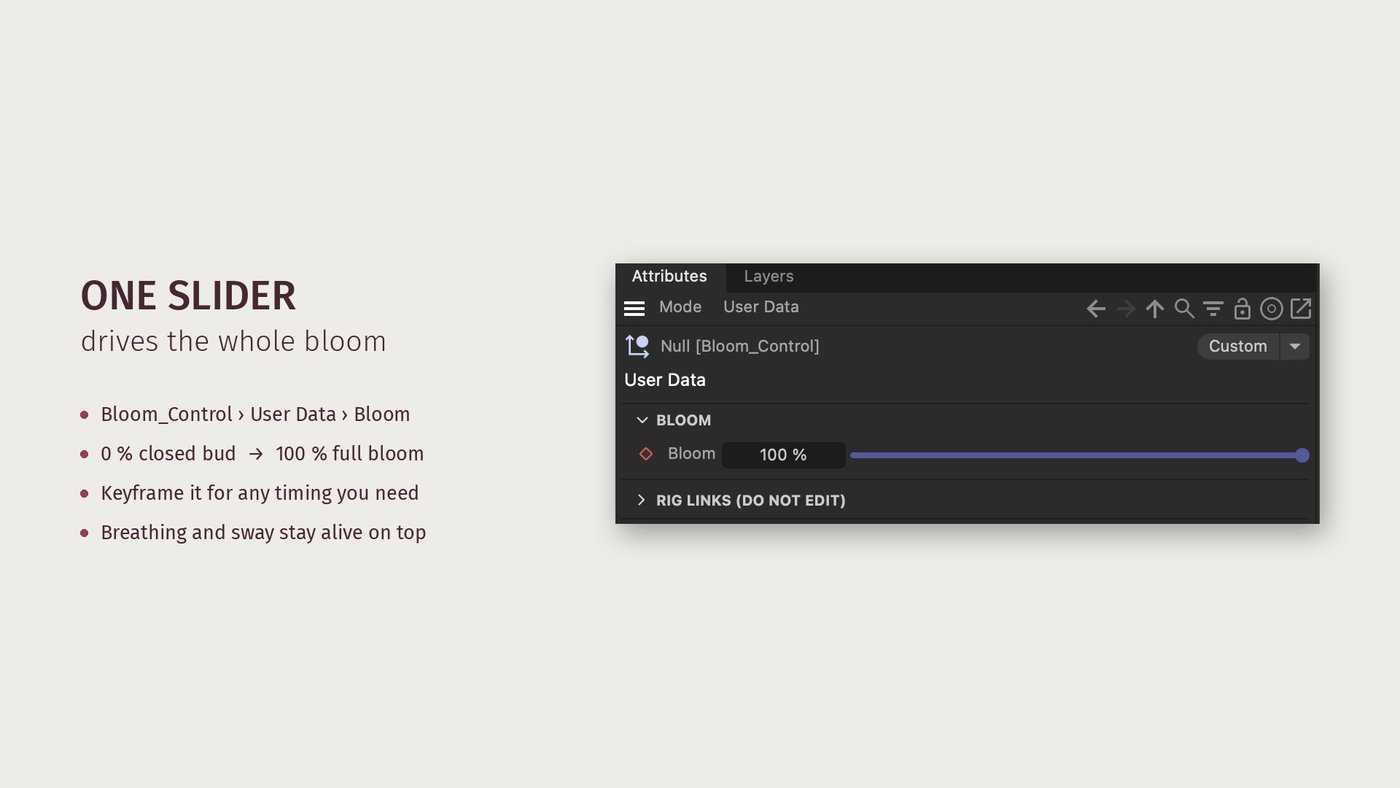
A single Bloom slider from 0 to 100 % drives the opening. At 0 the spathe is wrapped tightly around the spadix, like a real calla lily bud; at 100 % the flower is fully open.- The clip is 14 seconds long. The flower is fully open by frame 192, then keeps breathing and gently swaying.
- You can animate the slider yourself: speed up or slow down the bloom, stop the flower at any stage or make a still frame.
How the flower bloom was made in Cinema 4D
A blooming flower is one of the hardest things to animate in 3D. The petal has to unfold smoothly, never pass through itself and look alive rather than mechanical. Here is how this project solves it.The shape is sculpted, not bent by a deformer
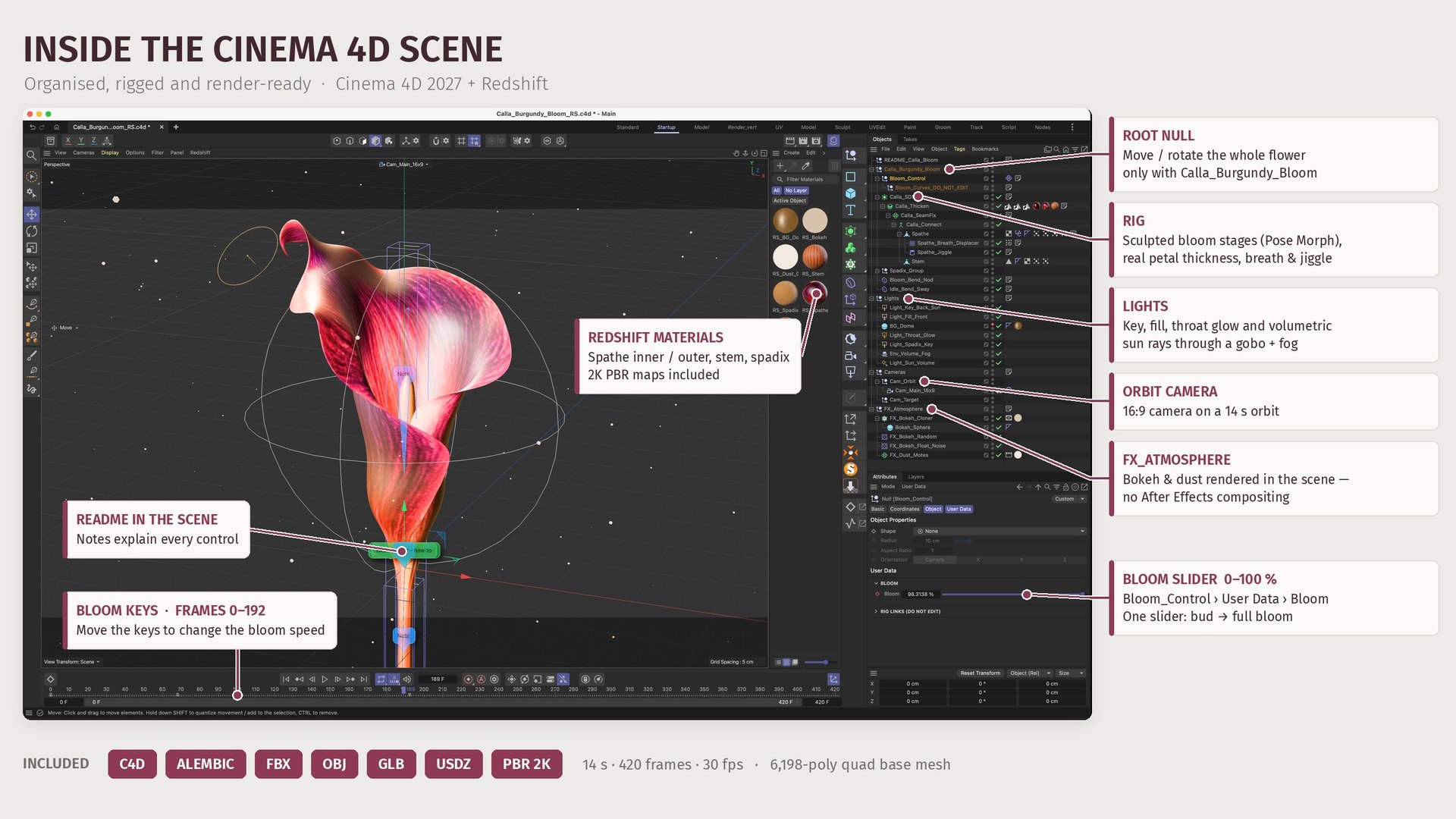
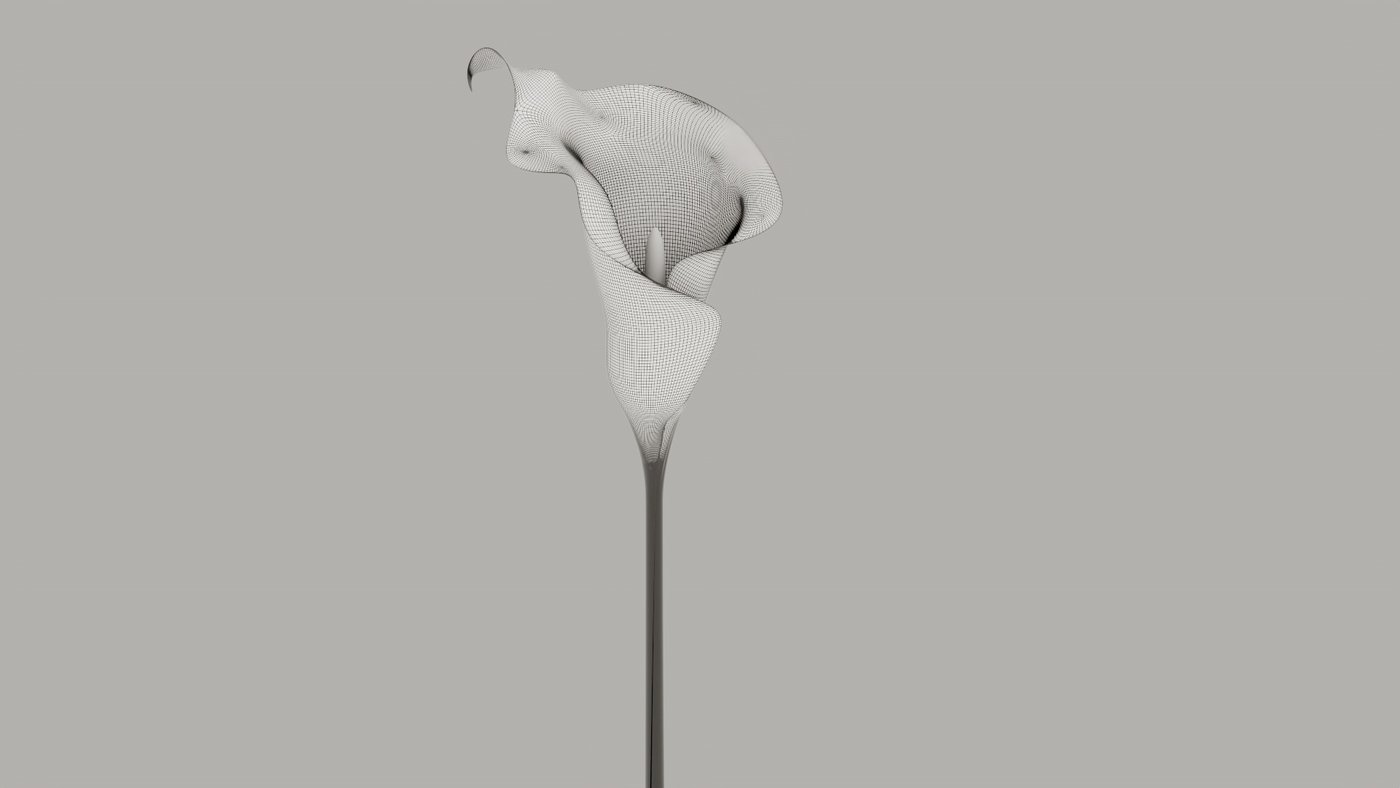
The obvious route is to wrap a plane into a spiral with a deformer (Spline Wrap, Bend, Twist). We tried it, and the petal looks flat and lifeless. So the bloom stages were sculpted by hand, from a tight bud to the open flower, and the transitions between them are built with Pose Morph. The mesh stays clean, all quads, ready for Subdivision Surface.A petal with real thickness
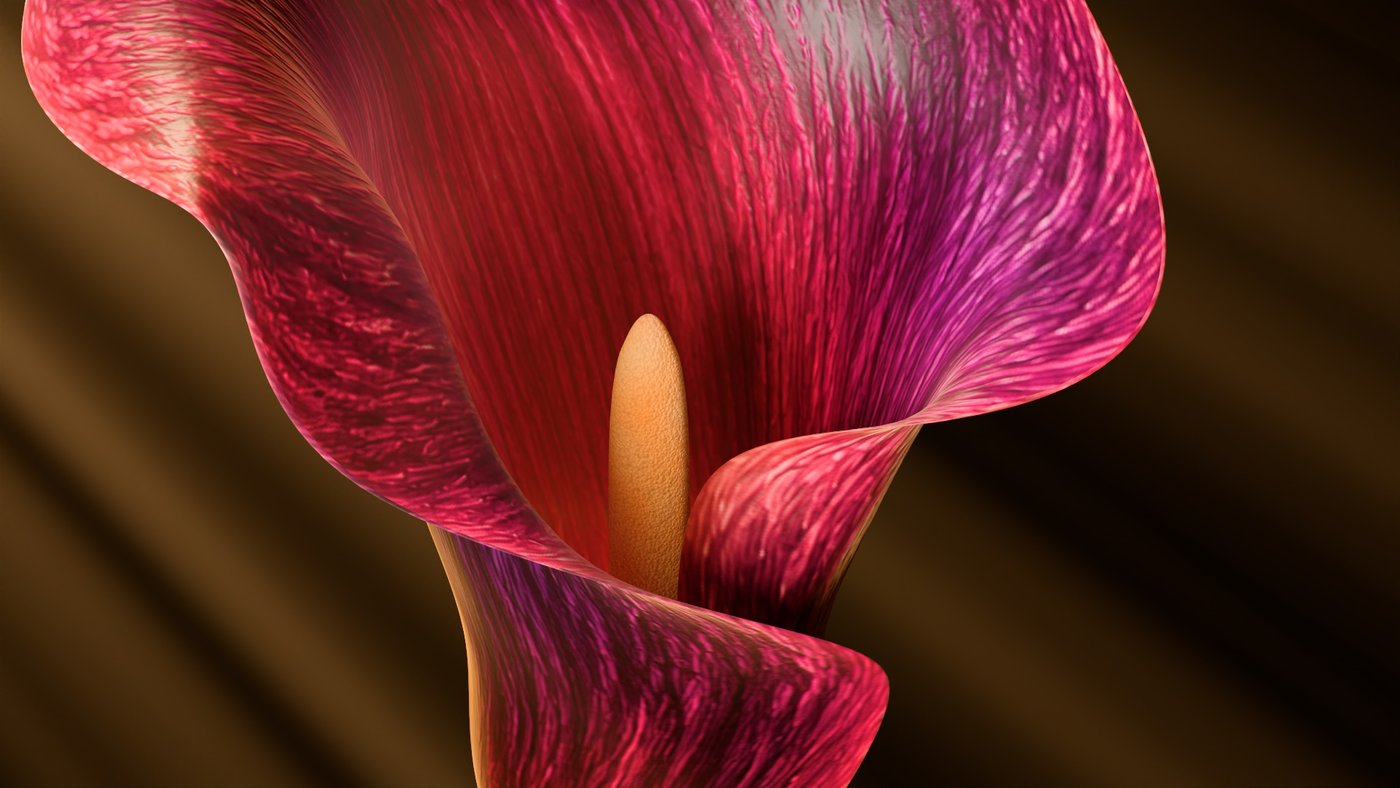
A calla spathe is not a flat sheet. It has thickness, so the edge looks believable even in macro shots, and the inner and outer sides get different materials.One slider instead of dozens of keys
A Python tag links the Bloom slider to every part of the flower: the spathe stages, the spadix growth, the head tilt and the stem bend. No need to animate each part separately — two keys on the slider are enough.Living motion on top of the bloom
The flower does not freeze once it opens. It breathes slightly, sways on the stem, and the spathe trembles with inertia. These layers run on top of the slider, so the flower stays alive in any pose.Rays and bokeh live in the scene, not in After Effects
The light rays are Redshift volumetric light passed through a gobo into light fog. The bokeh and dust motes are real objects in the shot, blurred by the camera’s depth of field. Everything renders straight from the scene, and each effect can be switched off on its own.The animation for Blender and other apps
The full animation is baked to Alembic with constant topology and material face sets, so you can render it in Blender, Houdini or Maya with the PBR textures included.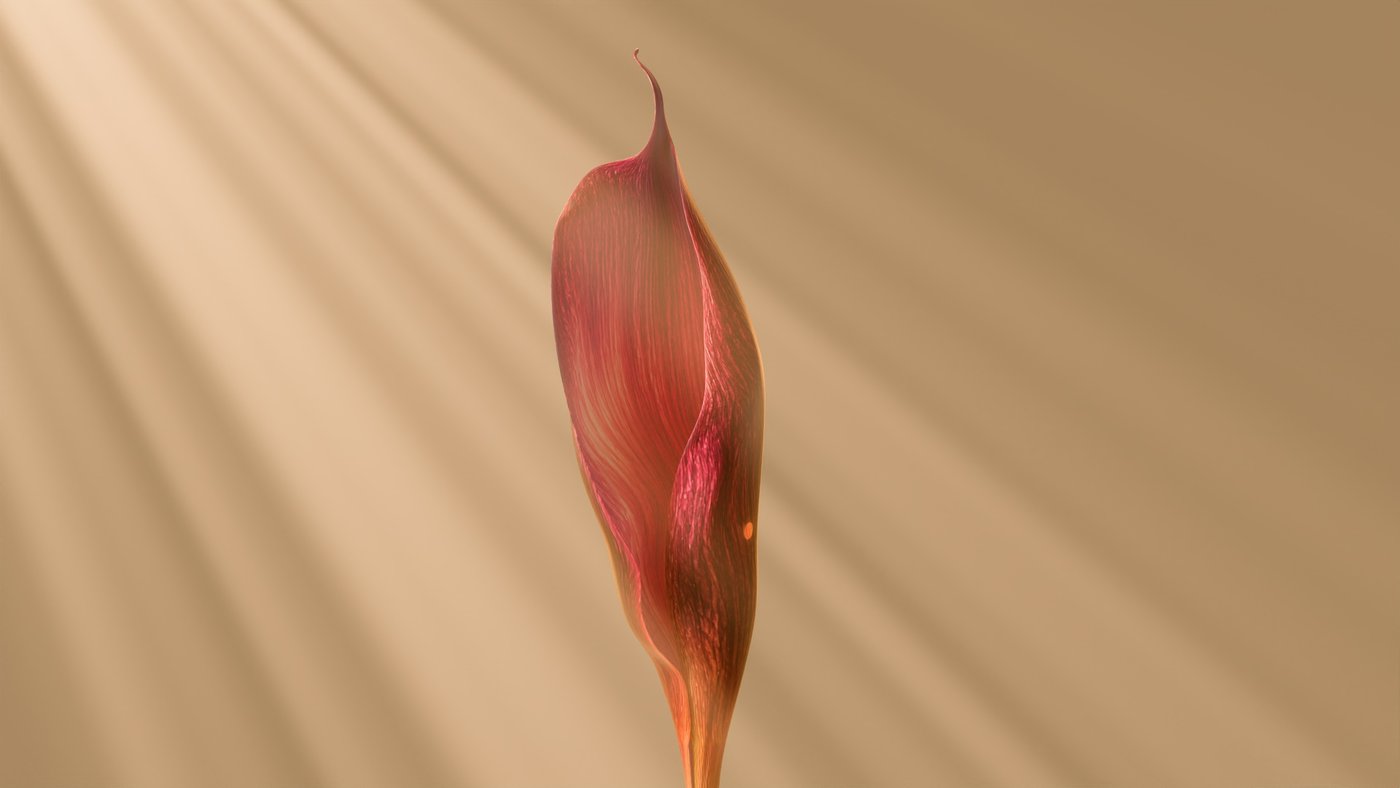

What it is for
- Cosmetics, perfume and skincare ads with floral notes
- Premium, moody “evening” visuals, packaging, luxury
- Intros, transitions and backgrounds in motion design
- Music visualizers and content for Reels and Shorts
- Botany learning materials
What’s in the archive
- Cinema 4D scene (.c4d) with the rig, a 420-frame animation, an orbiting camera, lighting, light rays and bokeh; textures use relative paths
- Alembic (.abc) — the full animation baked, frames 0–420
- PBR textures 2048 × 2048: Base Color, Normal, Roughness, Metallic, Translucency
- README
- Static stages in FBX and OBJ, plus GLB and USDZ for AR, are in the CGTrader version
Technical details
- Software: Cinema 4D 2027 or newer, Redshift renderer
- Animation: 14 s, 420 frames, 30 fps
- Mesh: 6,198 polygons (quads), about 75K with Subdivision Surface in render
- Geometry: petal with thickness; stem and spadix as separate parts
- Size: real-world scale, about 65 cm tall
- Plugins: none needed (native materials require Redshift)